
WHAT IS THIRD PARTY RISK MANAGEMENT?
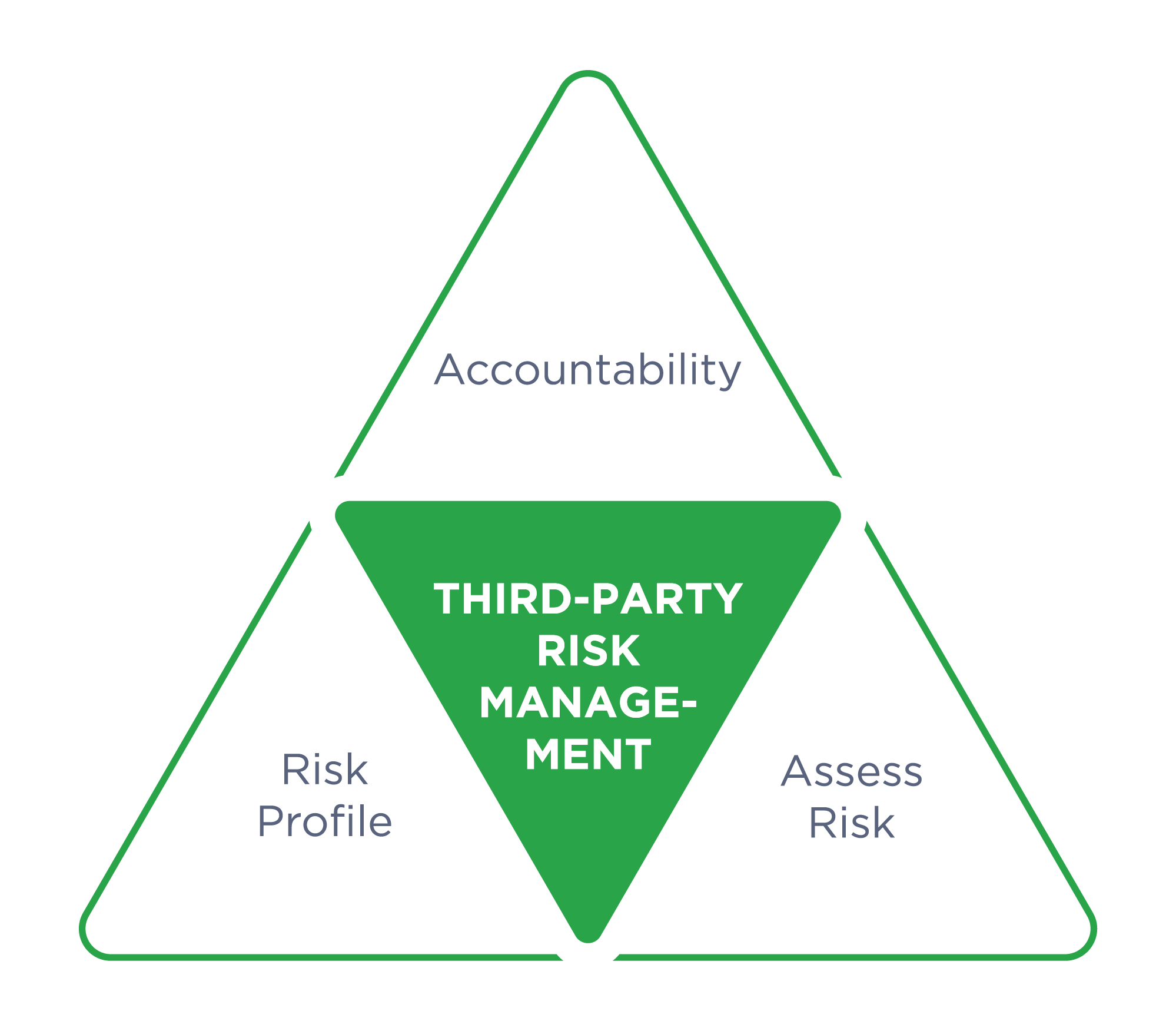
Third Party Risk Management (TPRM) is a process that involves identifying, assessing, and mitigating the various risks that emerge over the entire lifecycle of your relationships with third parties. It requires visibility of all the third parties an organisation engages with to support their customers and operational processes.
The purpose of TPRM is to ensure that your organisation’s risks related to third parties are fully understood and well managed. The TPRM process often starts during procurement and should continue until the offboarding process is completer.

Potential third party risks can fall under these categories:

Reputational Risks

Strategic Risks

Operational Risks

Economic Risks

Legislative/
Regulatory Risks
THE TPRM CHALLENGE
Modern organisations rely heavily on third-party vendors, suppliers and service providers to deliver critical business functions. While this reliance drives efficiency and innovation, it introduces significant risk exposure. Data breaches, regulatory non-compliance, operational failures, and reputational damage often stem from inadequate oversight of third-party relationships.
Traditional third-party risk management (TPRM) methods are cumbersome and fragmented. Manual processes, spreadsheets, and email chains dominate, creating inefficiencies and blind spots. Risk assessments are inconsistent, remediation efforts are scattered, and compliance obligations evolve faster than organisations can respond. This complexity often results in delayed action, increased costs, and heightened vulnerability.
THE TPRM SOLUTION
Phinity revolutionises TPRM by automating and centralising the entire lifecycle of third-party risk management. From onboarding and profiling to continuous monitoring and remediation, our platform ensures complete visibility and control.
DYNAMIC RISK PROFILING
Build comprehensive risk profiles for each vendor, factoring in regulatory requirements, operational dependencies, and data security considerations.
AUTOMATED WORKFLOWS
Configurable workflows streamline assessments, approvals, and reporting, reducing manual intervention.
RULES ENGINE (RPA)
Our intelligent automation engine accelerates repetitive tasks, enabling faster decision-making and freeing resources for strategic priorities.
REAL-TIME MONITORING
Stay ahead of emerging risks with dashboards that provide actionable insights and trend analysis.
RESPOND
Assign and track the risk items identified during your third party risk assessment through to remediation. Lastly, report on the progress of your remediation efforts.
By integrating these capabilities, Phinity transforms TPRM from a reactive process into a proactive, strategic function.
WHY CHOOSE PHINITY?
In today’s interconnected business environment, third-party risk is enterprise risk. Phinity empowers organisations to manage this complexity with confidence, reducing exposure while enhancing operational resilience.
Fast Implementation
Deploy quickly and start managing risks without lengthy setup.
Centralised Oversight
Consolidate all third-party risk data in one platform for clarity and accountability.
Enhanced Compliance
Meet evolving regulatory obligations with automated reporting and audit trails.
Efficiency Gains
Reduce labour costs and administrative overhead through automation.
Improved Collaboration
Strengthen relationships with vendors through transparent communication and shared expectations.
Risk Reduction
Strengthen relationships with vendors through transparent communication and shared expectations.
INTEGRATION WITH RESILIENCE
Every risk and control tracked in Phinity is connected to Resilience, our remediation engine. When gaps are identified, whether in controls or compliance, Resilience ensures corrective actions are allocated, monitored, and completed. This closes the loop on governance, turning insight into action.
Why It Matters
In today’s interconnected business environment, third-party risk is enterprise risk. Phinity empowers organisations to manage this complexity with confidence, reducing exposure while enhancing operational resilience.